Is Enema Play Safe? A Risk-Aware Guide
For healthy adults, enema play is low-risk when it's done with awareness, consent, reasonable volumes and attention to the body's signals. Serious complications are rare and almost always tied to harsh ingredients, excessive volume, pre-existing conditions, or ignoring distress, not to the practice itself. The short version: risk is controlled by informed practice, not by fear.
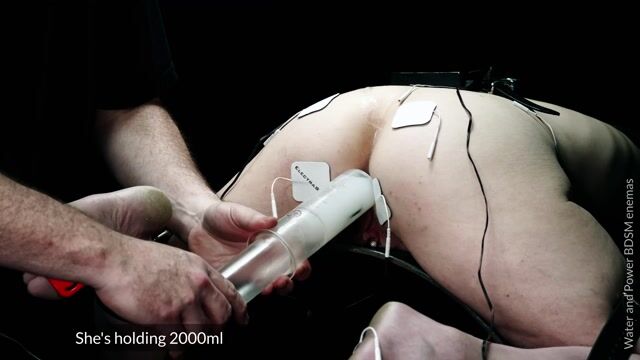
Is high volume safe?
Mid-to-high volumes are routine in this kind of play. Three or four litres is common, and a six-litre challenge is achievable for some. How much counts as a lot varies a lot from person to person, so build up gradually and stop at any sign of real pain or distress. Full detail and citations →
A high-volume enema in practice
Are soapy enemas safe?
Diluted soap-suds enemas have been studied in large patient cohorts without serious adverse events. The rare severe outcomes in the literature involve harsh or undiluted soap, excessive volume, repeated use, or pre-existing bowel conditions. Keep the soap mild and well diluted, and stop at any sign of distress. Full detail and citations →
A soapy, high-volume session
Does the water matter?
Yes. Plain tapwater leaches electrolytes and, at volume, risks water intoxication. Use normal saline instead: nine grams of preservative-free salt per litre, kept near body temperature. More on mixtures →
Are alcohol enemas dangerous?
This one isn't a myth, but it's overstated. The medical literature contains only a handful of reported cases of alcohol-induced proctocolitis, and the notorious ones involved large volumes of strong spirits. A small volume (~250 ml) of low-percentage alcohol in someone with no pre-existing conditions carries low risk, but it is still a risk you take on yourself. Full detail and citations →
A wine enema in action
Are air enemas dangerous?
The scary figures come from colonoscopy, which pushes many litres of air through instruments that reach deep into the colon. Belly-inflation play uses no such instrument, so the perforation risk those studies describe doesn't apply the same way. There is a very small air-embolism risk in the literature, fully mitigated by using CO₂ instead of air. Full detail and citations →
An air-inflation session
Are glass syringes dangerous?
Over more than ten years of use, breakages have been rare and have happened during cleaning, at the shoulder where the plunger meets the barrel, not in use. Careful handling and cleaning is what keeps them safe. Full detail →
A glass syringe in use
The bottom line
Risk-aware, consensual, well-informed play in healthy adults is the safe path: mild mixtures, reasonable volumes, saline not plain water, and an immediate stop at any sign of pain, bleeding or unusual distress. Read the full FAQ for the evidence, browse previews by model, or see the latest clips.